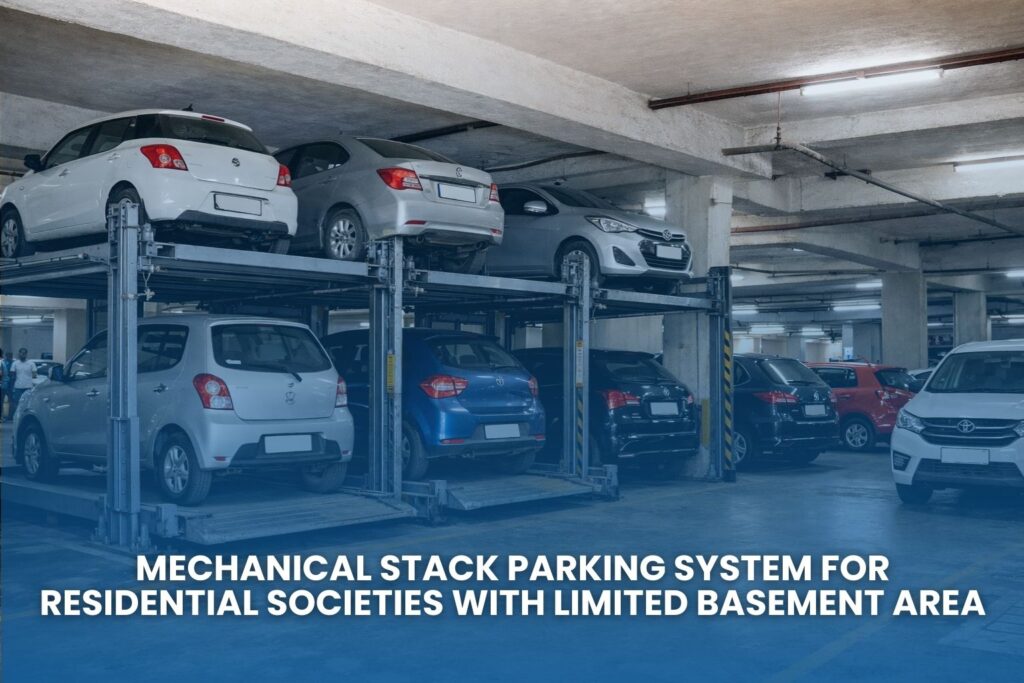
In most urban residential societies today, parking is no longer a convenience, it is a daily struggle. As families own multiple vehicles and basement footprints remain fixed, managing limited space becomes increasingly complex. Expanding horizontally is rarely feasible and constructing additional underground levels can be prohibitively expensive. This is where a mechanical stack parking solution becomes not just practical, but necessary.
A mechanical stack parking system is specifically designed to multiply parking capacity within the same built-up area by utilizing vertical space. Instead of dedicating large circulation lanes and ramps to reach separate parking floors, vehicles are positioned on engineered platforms that lift and stack cars one above another. This method transforms underutilized headroom into functional parking real estate.
Understanding the Concept
A stackable car parking system operates through hydraulic, electro-mechanical or motor-driven lifting platforms. Vehicles are parked on steel platforms that move vertically (and in some cases horizontally) to create space for other vehicles. These systems are categorized under the broader umbrella of a vertical car parking system or vertical parking system, depending on their configuration.
Unlike conventional parking layouts that require extensive maneuvering space, mechanical systems minimize driveways and eliminate the need for ramps in many cases. The result is a significant increase in parking density without structural expansion.
Why Residential Societies Prefer Mechanical Stack Parking
1. Maximizing Limited Basement Area
Basements in residential buildings are often constrained by column grids, fire safety regulations, ventilation shafts and structural beams. A traditional layout may accommodate only a fixed number of cars because of turning radii and circulation space requirements. A multi level car parking system changes that equation by stacking vehicles vertically within the same structural envelope.
In practical terms, a society that previously accommodated 25–30 cars may increase capacity to 50 or more, depending on ceiling height and configuration.
2. Cost-Effective Alternative to Civil Expansion
Excavating additional basement levels requires heavy civil engineering work, waterproofing, soil stabilization and regulatory approvals. The cost per parking slot escalates dramatically. Installing a mechanical stack parking system, by contrast, leverages existing structural space and significantly reduces capital expenditure compared to new construction.
3. Reduced Internal Traffic Congestion
In traditional layouts, vehicles continuously circulate in search of available slots. This increases fuel consumption, emissions and the risk of minor collisions. A structured vertical parking system allocates defined slots, minimizing confusion and unnecessary vehicle movement.
4. Enhanced Vehicle Safety
Because vehicles remain stationary on designated platforms, there is less exposure to accidental scrapes, dents or unauthorized shifting. Organized stacking improves orderliness and accountability within residential premises.
Types of Stackable Parking Solutions
Residential societies can choose from different configurations based on ceiling height, budget and user convenience.
Two-Level Stack Parking
This is the most common format in residential buildings. One vehicle is parked at ground level and another is lifted above it. It is simple, reliable and ideal for moderate parking expansion.
Three-Level Mechanical Systems
Where vertical clearance permits, a three-tier multi level car parking system significantly enhances parking density. These systems require precise structural assessment and professional engineering design.
Puzzle Parking Systems
Puzzle systems allow both vertical and horizontal movement of platforms. Vehicles shift like pieces on a board to create access space. This configuration is suitable when maximizing every square meter is critical.
Technical and Structural Considerations
Before installation, a thorough feasibility assessment is essential. Key factors include:
- Ceiling height: Adequate vertical clearance is required for stacking.
- Load-bearing capacity: Structural engineers must confirm that slabs and foundations can handle concentrated loads.
- Fire and safety compliance: Systems must adhere to local building codes and fire department norms.
- Power backup: Since lifts operate electrically or hydraulically, emergency power supply ensures uninterrupted access.
Professional consultation with experienced car parking system manufacturers is crucial at this stage. Established manufacturers conduct site surveys, provide customized layouts and ensure compliance with engineering standards.
Operational Efficiency and Maintenance
A well-designed mechanical stack parking system is straightforward to operate. Residents park on a platform, activate the lifting mechanism (either manually or through automated controls) and retrieve vehicles when required.
Routine maintenance typically includes:
- Hydraulic system inspection
- Motor and gearbox checks
- Lubrication of moving components
- Safety lock testing
Societies should enter into annual maintenance contracts with trusted car parking system manufacturers to ensure long-term reliability and safety.
Environmental and Urban Impact
From an urban planning perspective, vertical parking solutions support sustainable development. By reducing the need for expansive parking lots, more ground space can be allocated to green areas, pedestrian pathways or community amenities.
Additionally, shorter internal circulation distances reduce fuel wastage and emissions. In densely populated cities where land value is exceptionally high, the ability to increase parking capacity without expanding footprint adds tangible property value.
Practical Example
Consider a residential complex with 40 apartments but only 22 basement parking slots. Resident dissatisfaction grows as vehicle ownership rises. Instead of acquiring adjacent land or undertaking major structural renovation, the society installs a stackable car parking system across selected bays.
Within months, the available parking doubles to nearly 40 slots. The project is completed with minimal disruption and the cost per new slot remains significantly lower than civil expansion. Property value improves and internal disputes over parking allocation decline substantially.
Choosing the Right Implementation Partner
The success of any vertical car parking system depends on engineering precision and manufacturing quality. When evaluating car parking system manufacturers, societies should assess:
- Proven installation track record
- Quality certifications
- Customization capability
- Warranty coverage
- After-sales service infrastructure
A well-established manufacturer provides not just equipment, but structural consultation, compliance guidance and ongoing support.
As residential developments continue to grow vertically, parking infrastructure must evolve accordingly. A mechanical stack parking solution addresses the core challenge of limited basement area without demanding additional land or expensive reconstruction.
Whether implemented as a two-tier lift or a more advanced multi level car parking system, vertical stacking technology offers efficiency, order and long-term value. For residential societies facing space constraints, investing in a professionally designed mechanical stack parking system is no longer an optional upgrade, it is a strategic necessity.